Search engine optimization is entering a new phase. For years, businesses focused on ranking their websites on Google, improving organic traffic, and monitoring keywords. Those activities remain important, but the way people search for information is changing.
Today, users can ask AI platforms for product recommendations, business comparisons, software suggestions, travel ideas, and answers to complex questions. Instead of browsing ten blue links, they may receive a summarized response containing several brands and sources.
This shift has created a new marketing question: How visible is your brand inside AI-generated search results?
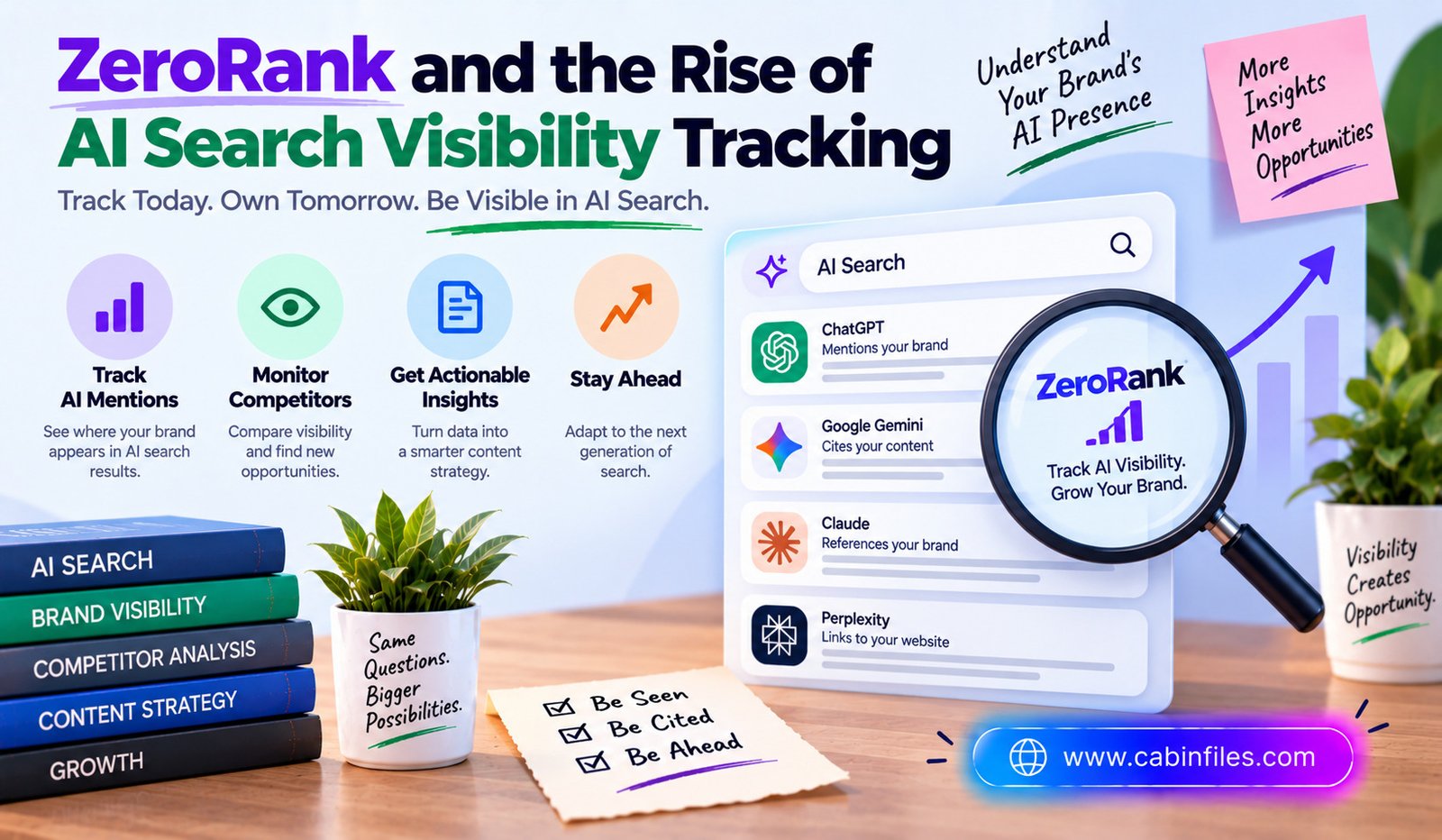
Tools such as ZeroRank are designed to help businesses answer that question. Rather than focusing exclusively on traditional keyword rankings, AI search visibility platforms monitor how brands appear across AI-generated answers, including mentions, positions, citations, competitors, and other signals.
What Is AI Search Visibility?
AI search visibility describes how frequently a company, product, or website appears when people ask questions through AI-powered search platforms.
Imagine someone asks an AI assistant, “What are the best project management tools for a small company?”
The answer may recommend several products. Some businesses might appear prominently, while others may not be mentioned at all.
This creates a visibility gap that traditional SEO reports may not show.
A company could rank well for traditional keywords but still receive limited exposure in AI-generated recommendations. Conversely, a brand with a smaller traditional search presence could appear frequently in AI responses because relevant websites, reviews, discussions, and other sources provide information about it.
AI visibility tracking is designed to measure this new form of discovery.
Why Traditional SEO Tracking Is Changing
Traditional SEO gives website owners familiar metrics such as rankings, impressions, clicks, organic traffic, backlinks, and conversions.
These metrics remain valuable. However, AI search changes the customer journey.
When an AI platform answers a question directly, the user may not click through a conventional search results page. The platform can summarize information from multiple sources and recommend specific companies.
This means marketers increasingly need to understand more than where their website ranks.
They also need to know:
- How often is the brand mentioned?
- Which competitors appear in the same answers?
- Where does the brand appear in recommendations?
- Which websites are being cited?
- How does AI describe the brand?
- Are AI platforms providing accurate information?
- Which questions generate the most visibility?
ZeroRank is designed around these types of questions.
How ZeroRank Approaches AI Search Tracking
ZeroRank provides a platform for monitoring brand visibility across AI-powered search experiences.
According to its product information, the platform tracks AI responses across multiple systems, including ChatGPT, Perplexity, Gemini, Google AI Overviews, Google AI Mode, Claude, Grok, and Microsoft Copilot. It can monitor metrics such as brand visibility, mentions, position, citations, competitors, and sentiment.
This gives marketers a more structured way to study AI-generated results.
Instead of manually asking dozens of questions every week and recording the answers in a spreadsheet, an AI visibility platform can organize these observations into measurable data.
That makes it easier to identify trends and compare performance over time.
Measuring Brand Mentions
One of the simplest indicators of AI visibility is whether a brand appears in an answer.
However, tracking mentions becomes much more useful when it is connected to specific prompts.
For example, a software company could track questions about the best tools for startups, affordable business software, alternatives to a particular competitor, or solutions for a specific industry.
If the brand consistently appears for some questions but disappears for others, marketers can begin investigating why.
ZeroRank’s tracking approach allows businesses to monitor these prompt-level results and identify where their brands are visible or absent.
This can help turn AI search optimization into a measurable activity rather than something based purely on occasional experiments.
Visibility Is More Than a Mention
Being mentioned does not necessarily mean a brand has strong visibility.
Consider an AI-generated list containing ten companies. Appearing in the first few recommendations can provide a different level of exposure from appearing at the bottom.
For this reason, position can provide additional context.
ZeroRank tracks positioning and average rank for relevant AI responses. This allows businesses to monitor not only whether they appear but also how prominently they are presented.
Over time, this information can help marketers understand whether their AI search presence is improving.
Understanding AI Citations
Citations are another important part of AI search.
AI platforms can reference external webpages when generating responses. These sources may include company websites, review websites, publications, comparison articles, forums, and industry resources.
Understanding these citations can reveal where AI systems are obtaining information.
For example, suppose an AI platform repeatedly recommends a competitor and cites three industry publications supporting that recommendation. Those publications could provide clues about why the competitor has stronger AI visibility.
ZeroRank’s citation tracking is designed to help marketers identify these sources and understand the information ecosystem surrounding AI-generated answers.
This can be particularly useful when developing content and digital PR strategies.
Competitor Monitoring Creates Better Context
AI visibility should rarely be analyzed in isolation.
If your brand appears in 25% of tracked answers, that number might initially seem positive. But what if your biggest competitor appears in 60%?
That changes the interpretation completely.
Competitor tracking allows businesses to compare their presence with other brands targeting similar customers.
ZeroRank provides competitor analysis as part of its platform, helping marketers examine differences in visibility, mentions, positions, citations, and other AI search metrics.
This can reveal opportunities that may otherwise remain hidden.
Instead of asking, “How can we get more AI mentions?” a marketing team can ask, “Why is this competitor appearing in conversations where we are absent?”
That is a much more actionable question.
Sentiment Can Reveal Reputation Problems
AI visibility is not always positive.
A brand can be mentioned frequently while being described using outdated, incomplete, or unfavorable information.
This makes sentiment another useful metric.
ZeroRank includes sentiment analysis to help businesses understand how AI systems portray their brands in tracked responses.
For example, a company may discover that AI platforms generally describe its product positively but repeatedly mention an outdated weakness. That information could encourage the business to improve its website, publish updated information, strengthen third-party coverage, or address customer concerns.
The objective is therefore not simply to increase mentions.
It is to improve the overall quality of a brand’s AI presence.
Turning AI Tracking Into an SEO Strategy
AI search tracking becomes more useful when the data leads to action.
Suppose a company discovers that its competitors appear frequently for questions about a particular product category. The company can investigate the sources cited in those answers.
It may discover that competitors have strong coverage across industry publications, comparison websites, review pages, or educational resources.
The business can then work on closing those gaps.
This could involve improving existing website content, creating genuinely useful resources, updating outdated information, developing digital PR campaigns, earning relevant mentions, or strengthening the company’s broader online authority.
In this way, AI visibility tracking can complement rather than replace traditional SEO.
Why AI Visibility Tracking Is Becoming Important
The biggest reason AI search visibility matters is simple: customer discovery is becoming more conversational.
Users can describe what they want in complete sentences rather than entering short keyword phrases.
For example, instead of searching “CRM software,” someone might ask:
“What CRM is easiest for a five-person sales team with a limited budget?”
AI platforms can interpret the context and generate a personalized answer.
For brands, this means visibility may depend on how well they are represented across many different questions and information sources.
Monitoring these conversations can provide insights that conventional keyword reports cannot provide.
AI Search Tracking Does Not Replace Traditional SEO
It is important not to treat AI visibility as a replacement for traditional SEO.
Search engines remain a major discovery channel. Website speed, technical SEO, useful content, relevant keywords, backlinks, structured information, and user experience continue to matter.
In fact, strong traditional SEO can support AI visibility because AI systems need reliable information sources when generating answers.
The better approach is to consider AI search as an additional visibility layer.
Traditional SEO measures how well your website performs in search results.
AI visibility tracking examines how your brand appears when AI systems answer questions related to your market.
Together, these perspectives provide a broader understanding of online discovery.
Who Can Benefit From ZeroRank?
ZeroRank may be useful for businesses that depend on online recommendations and want to understand their presence in AI-powered search.
SaaS companies can monitor software recommendations. Ecommerce businesses can study product-related prompts. Agencies can track AI visibility for clients. Startups can establish a baseline as their brands become known online.
Established companies can also use AI tracking to identify situations where competitors receive more exposure in AI-generated answers.
The usefulness of the platform ultimately depends on how important AI-driven discovery is for the business’s customers.
The Future of AI Search Visibility
AI search is still developing, which makes this area difficult to predict.
AI models can change their responses, new sources can become influential, and the same question can produce different results over time.
This means AI visibility should not be treated as a one-time audit.
Regular monitoring can help businesses understand whether their visibility is increasing, declining, or shifting between platforms.
ZeroRank’s approach reflects this transition from occasional manual checking toward continuous measurement.
As AI becomes a bigger part of the way people discover information, brands will likely need new ways to understand how they are represented within these systems.
Final Thoughts
The rise of AI search is changing the definition of online visibility.
Ranking on Google remains important, but it is no longer the only way customers can discover a brand. AI platforms can now summarize information, compare products, recommend companies, and answer questions without requiring users to browse traditional search results.
ZeroRank focuses on this emerging environment by tracking brand mentions, visibility, positions, citations, competitors, and sentiment across multiple AI platforms.
Its biggest value is the ability to turn an otherwise difficult-to-measure activity into something marketers can monitor and analyze.
For businesses, the goal should not simply be to appear in more AI answers. The bigger objective is to build a strong, accurate, and trustworthy online presence that AI systems can recognize and reference.
As conversational search continues to grow, AI search visibility tracking could become as important to modern digital marketing as traditional rank tracking is today.